

Wild Rise Goods offers small batch, locally fermented and dehydrated sourdough starter made right here in Western New York… ready to bring your bread to life.
How It Works
Just a few simple steps to go from starter to dough!
Directions:
Gather Your Supplies:
- Flour (All-purpose and whole wheat) We prefer King Arthur Flour but any brand will work.
- 2 glass jars with metal or glass lids (16oz. wide-mouth canning jars work well)
- Spatula
- A kitchen scale that measures in grams (I recommend this one) and YES, you really need a scale
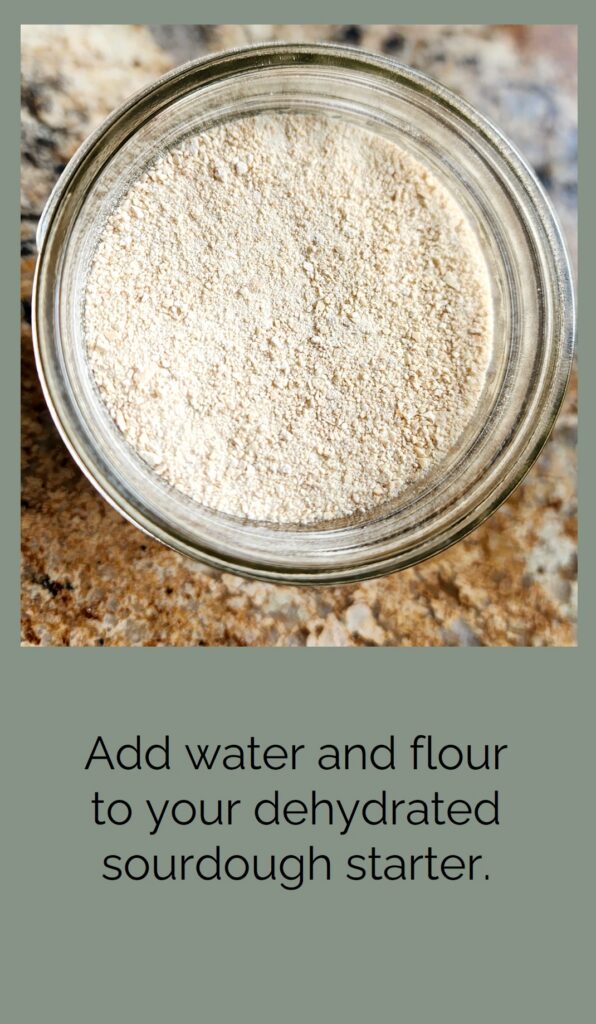
- Wild Rise Goods Dehydrated Sourdough Starter
Other supplies you’ll need to bake sourdough bread:
- Large bowl or container with a lid for bulk fermenting (aka letting it rise) your dough
- Dutch oven or loaf pans
- Parchment liners for a loaf pan or silicone bread sling for a dutch oven
- Sharp knife or bread lame for scoring
Step 1 - PM
In the evening, using a clean, sanitized jar, add:
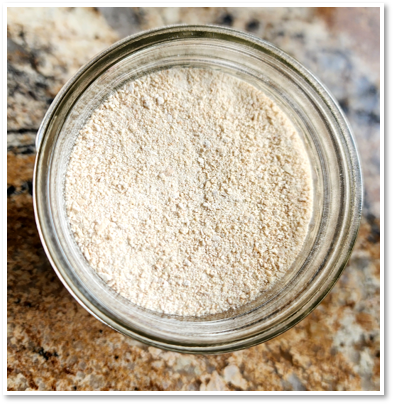
– 5 grams (1 teaspoon) Wild Rise Goods dehydrated sourdough starter
– 10 grams (about 1 Tablespoon) warm tap water
Stir until dissolved. Then, add:
– 10 grams (about 1 Tablespoon) AP flour
Stir until well combined.
_______________________________
The starter will be slightly thick. Cover the jar LOOSLEY with a lid. Air will build up in the jar so don’t screw the top on.
It won’t look like much is happening, but your starter is beginning to wake up!
Step 2 - AM
The next morning, add to the same jar:
– 25 grams (2 Tablespoons) of warm water
Stir until dissolved. Then, add:
– 25-30 grams (3 Tablespoons) of AP flour
Stir until well combined.
___________________________________
Plop this mixture into a clean jar. Cover loosely with a lid.
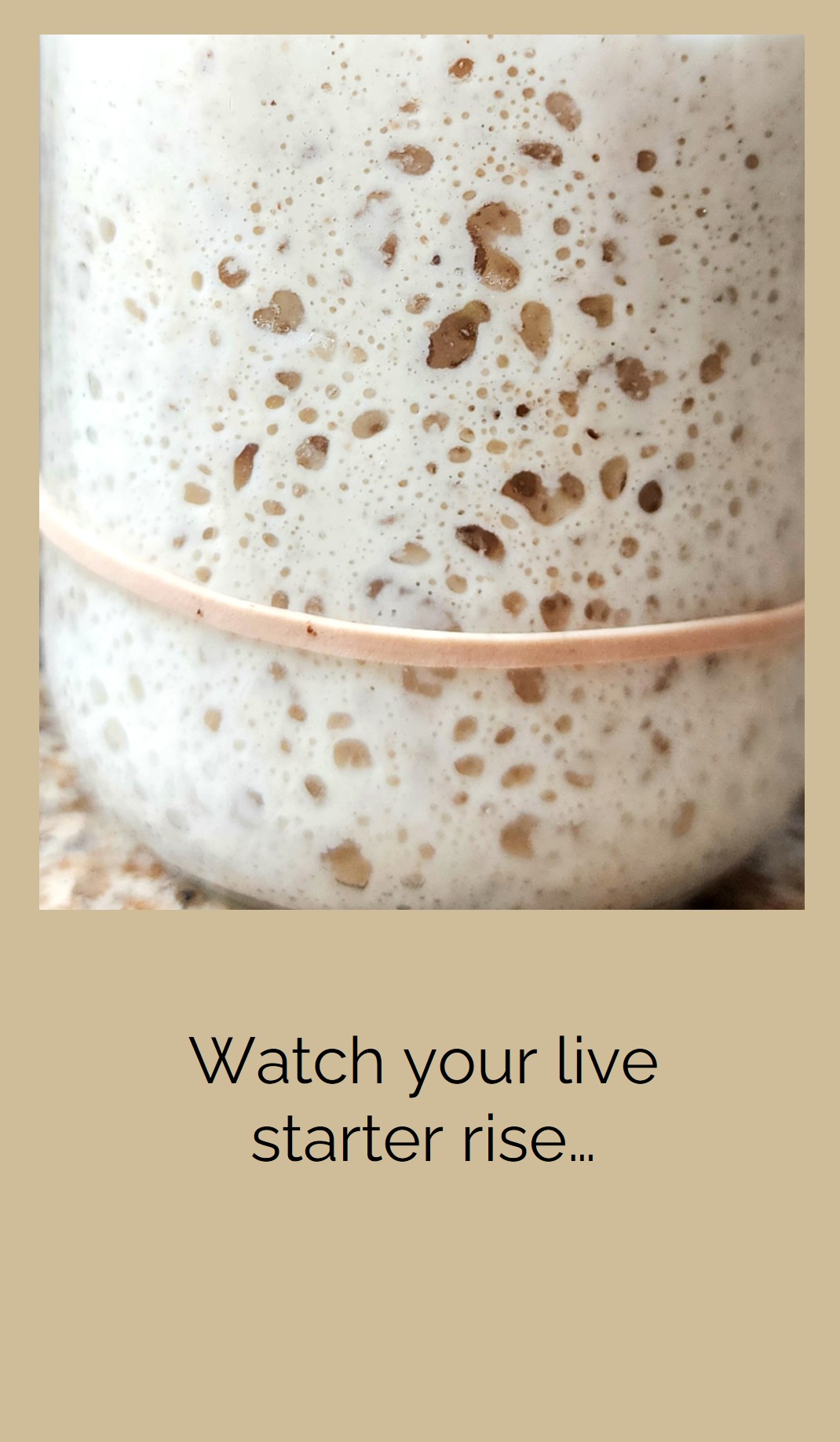
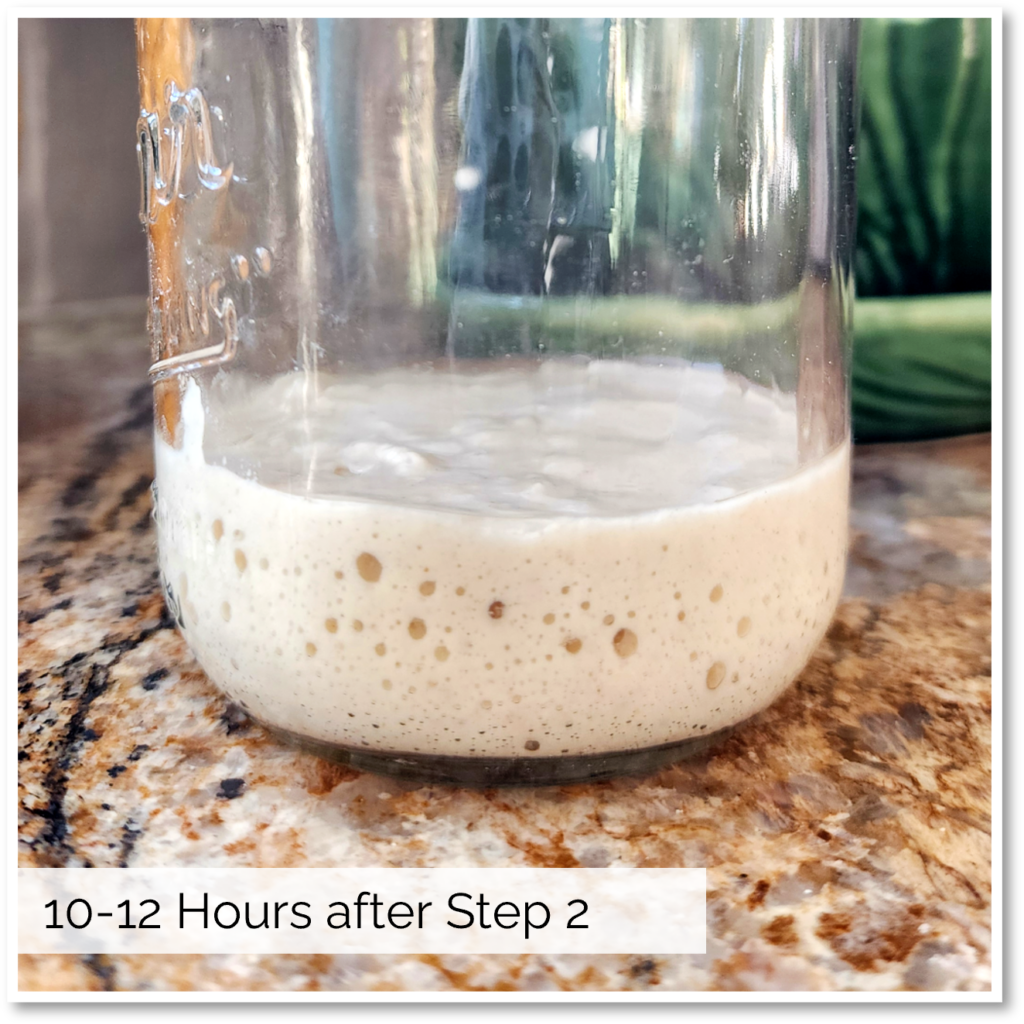
Place a rubber band around your jar aligning it with the top of the starter mixture.
Over the course of the day, you should see a few small bubbles form.
Step 3 - PM
Throw out or “discard” 25 grams (or 2 Tbsp) of your starter.
This will leave about 50 grams of starter in your jar.
Add to that:
– 50 grams warm water
Stir until dissolved. Then, add:
– 50-55 grams AP flour
Stir until well combined.
______________________________________________
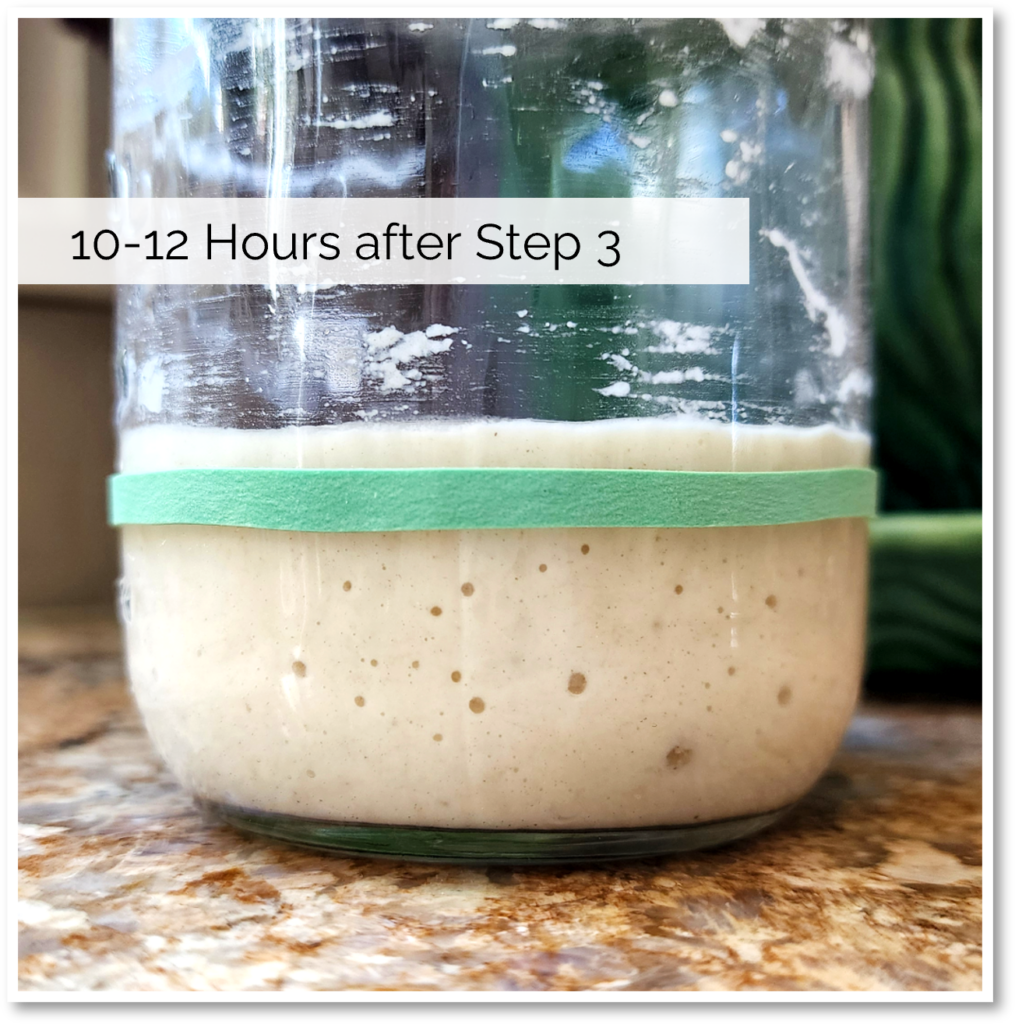
The starter will be thick. Plop this mixture in your clean jar and cover loosely with a lid. Place a rubber band on your jar as a visual marker to track your starter’s rise.
Over the next 10-12 hours, your starter will develop small bubbles and slightly rise.
Step 4 - AM
Throw out or “discard” 100 grams of your starter.
This will leave about 50 grams of starter in your jar.
Add to that:
– 50 grams warm water
Stir until dissolved. Then, add:
– 50-55 grams AP flour (You can also substitute 5-10 grams of whole wheat flour)
Stir until well combined.
______________________________________
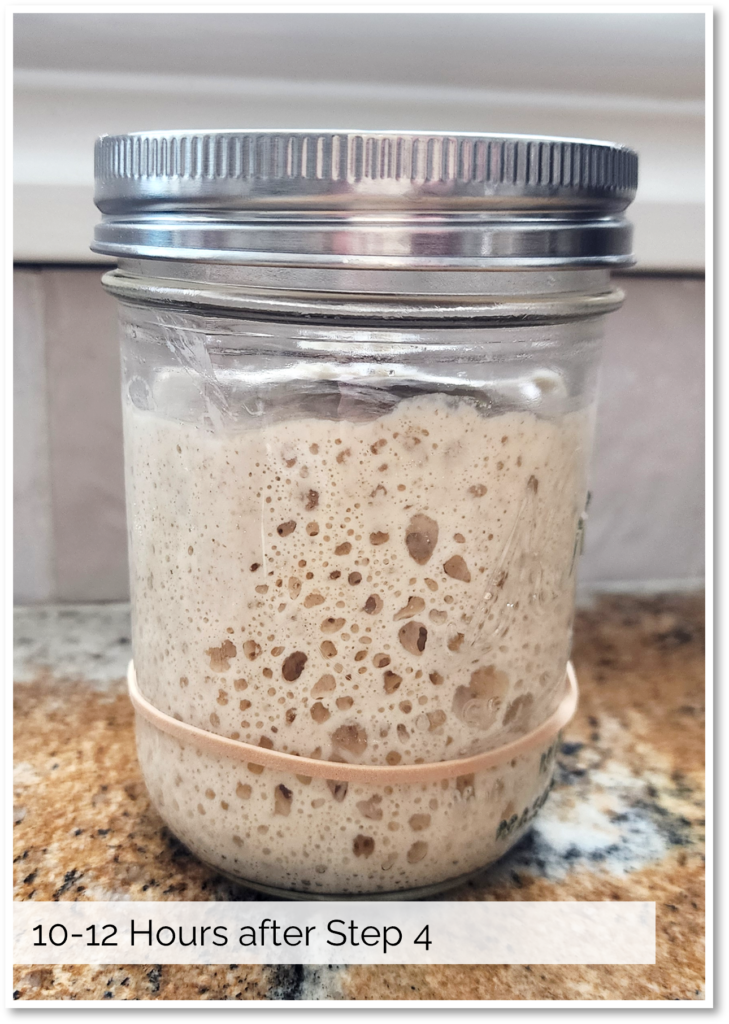
Plop this mixture in your clean jar and cover loosely with a lid. Use the rubber band to help mark the level of the starter in your jar.
Once this doubles or triples in size and begins to sink back down (anywhere from 6-12 hours), it can be used to make dough.
*If your starter doesn’t double or triple by evening, then repeat this step again in the PM before you go to bed. In the morning, if it’s doubled or tripled, then it’s ready to make dough!
Once your starter has doubled or tripled:
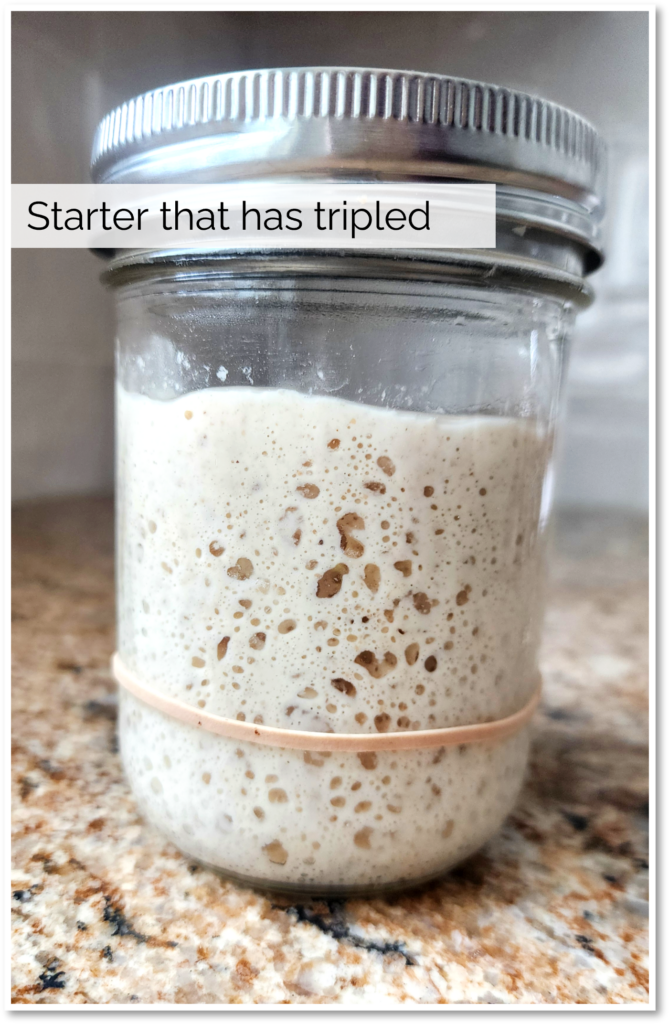
This process makes about 150g of starter.
Use 100-125 grams of starter to make your first loaf!
Most bread recipes call for 125 grams of starter, so you will have about 25 grams of extra starter leftover. You can feed the leftover starter to make more. Just add to it 60-70 grams of water and 60-70 grams of flour and you’ll have about 150 grams ready to use the next day. If you don’t want to keep feeding it, it can be put in the refrigerator until you’re ready to use it again (see “Waking up your refrigerated starter” below).
My favorite beginning recipe is the Same Day Sourdough Sandwich bread. It’s super easy and pretty foolproof!
You can also Google “Sourdough Discard Recipes” and use your starter to make all kinds of baked goods.
If you save at least 10 grams of your starter, you can keep it going.
BUT, if you don’t want the hassle of maintaing a starter, Wild Rise Goods dehydrated sourdough starter will be available at your local grocer. Just pick up another packet when the craving strikes!
Troubleshooting
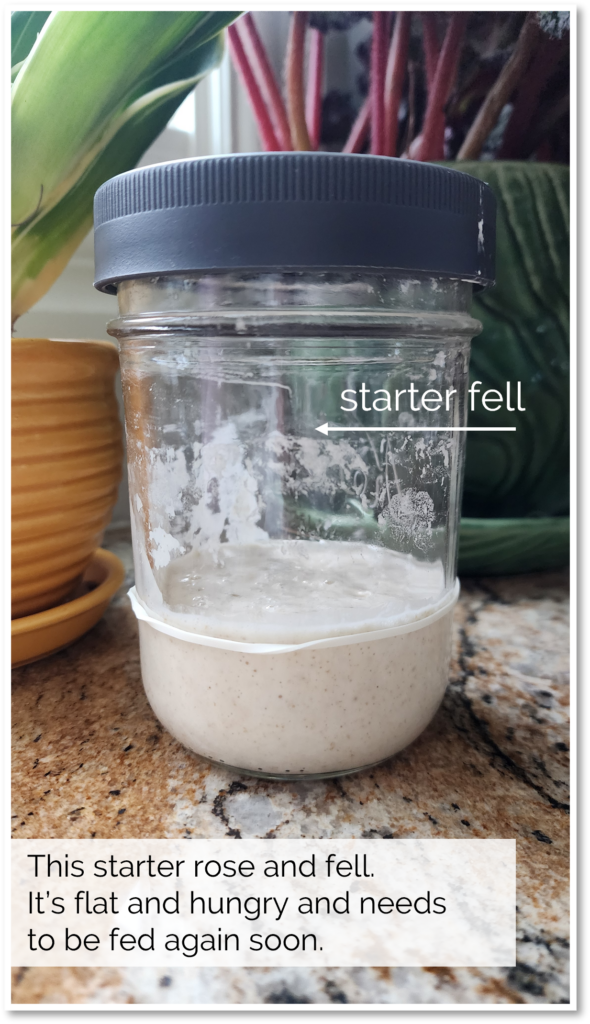
Your starter looks flat, runny, and isn’t bubbly.
You may have missed the rising window. This is why it’s important to use a clean jar and a rubber band. You will be able to see how far your starter rose.
A rising, bubbly starter is a “happy starter” at peak and is ready to use. A flat starter that lacks bubbles is a “hungry starter “. It needs to be fed again.
Throw out or “discard” about 100 grams of your starter. (Instead of throwing it out, you can use it in Discard Recipes.
This will leave about 50 grams of your starter left in the jar.
Add to that jar about 50 grams of warm water.
Stir until dissolved.
Then, add 40 grams All Purpose Flour and 20 grams of Whole Wheat Flour.
Wait 4-12 hours, and when it’s doubled or tripled, it is ready!
Frequently asked questions:
Have questions about caring for, feeding, or baking with your Wild Rise Goods sourdough starter?
This FAQ section covers the most common questions we hear from home bakers.
How do I take care of my Sourdough Starter? (The Daily Discard and Feed Routine)
The Daily Discard and Feed Routine will keep your sourdough starter healthy and active.
Discard:
Remove all but about 45-50g of starter. Throw what you’re getting rid of (called the “discard”) in the garbage if you aren’t baking that day. You can also use it in a recipe. Nothing is wrong with it, it’s a healthy, active starter.
Do not pour sourdough starter down the drain, it will clog your pipes. Wipe the residue our of your jar/bowl with a paper towel.
Feed:
Add 45-50 grams of warm water, then stir. Then, add 45-50g of flour. It doesn’t have to be precise. This is roughly a 1:1:1 ratio. If you’re eyeballing it, use about equal parts starter and water, then enough flour to make a thick peanut butter consistency. I use about 10 grams of whole wheat flour and 40 grams of AP flour in my feeding routine.
Once your starter peaks, it’s ready to use. It should be thick and have bubbles, air pockets, and webbing when you pour it out.
How much bread can I make with my Wild Rise Sourdough Starter?
You can make unlimited amounts of bread with one single bag of Wild Rise Goods Dehydrated Sourdough Starter.
Ten loaves or 1,000 loaves, as long as you save a small amount of starter each time you bake, you can keep feeding it flour and water to make more starter.
You can save as little as 5 grams of starter. Just add 5 grams of water and flour! As long as you keep adding Starter:Flour:Water in a 1:1:1 ratio, you’ll keep growing your starter.
Do I have to feed it every day?
To keep your starter active and healthy, you must discard and feed it daily.
Keep it in a sanitized glass jar with a metal/glass lid placed loosely on top. Don’t use a fabric lid or a paper towel. These will cause your starter to mold.
If you don’t plan to use it or cannot feed it for a day, then refrigerate it. Your live starter can be refrigerated for up to a few weeks between feedings.
If you don’t want to maintain your starter, you can always pick up a packet of Wild Rise Goods dehydrated sourdough to bake a few loaves when the craving strikes!
Your dehydrated starter is shelf stable for up to 2 years.
My starter isn't rising well/isn't getting bubbly...what do I do?
Starter that looks or acts sluggish is likely hungry and needs to be fed. You can help boost a sluggish starter by doing any or all of the following:
(OPTION 1) Do a Whole Wheat/AP Feed: Feed 50 grams of your starter with 50 grams of warm water, 20 grams of whole wheat flour, and 30 grams of AP flour.
(OPTION 2) Do a Stiff Feed: Feed 50 grams of starter with 50 grams of warm water, and 60-65 grams of flour. So use more flour than water. Your starter will have a very thick cookie batter consistency upon mixing.
(OPTION 3) Do a High Ratio Feed: Instead of feeding your starter at equal ratios (such as 50g starter/50g water/50g flour) feed it at a higher ratio. For example, take only 10 grams of starter and feed it 50grams of water, 50 grams of flour. (This is a 1:5:5 ratio.) Or, take 20 grams of starter and feed it 60 grams of water and 60 grams of flour. (This is a 1:3:3 ratio).
You can also do a High Ratio Feed any time you need more starter (such as when you want to bake more than one loaf of bread at a time – for example: 50g starter, 100 grams water, 100 grams flour will give you 250 grams of starter to use in a recipe).
Where do I keep the starter?
Keep your dehydrated starter in the sealed bag in your pantry until you’re ready to use it. It is shelf stable for up to 2 years.
Keep your live starter in a loosely covered glass jar or container, out of direct sunlight.
Do not put live starter in your oven, in the microwave, under a lamp, or in direct sunlight.
Do not consume raw starter.
Do I need to use whole wheat flour?
You can use All-purpose flour for your feedings or an AP/whole wheat mixture.
We recommend adding in one spoonful of whole wheat once in a while. This type of flour supercharges your starter. It also helps starter that doesn’t seem to be rising well.
How do I know when my starter is ready to use?
The starter will rise and fall over the course of the day.
Ideally, use your starter when it’s at its “peak” rise or after it’s fallen. If it falls back down a lot and has a very runny consistency, it means that your starter needs to be fed again before using in a recipe. You can use runny “unfed” starter in recipes, but it might take a little bit longer for the dough to rise. Don’t use your starter before it “peaks” otherwise you could end up with flat, dense bread.
Can I bake sourdough bread casually?
Absolutely! If you aren’t planning to use the live starter for a few days, you can put it in the fridge. Take it out a day before you plan to use it and “feed” the starter using the Daily Discard and Feed Routine. Once it at least doubles and peaks, it is ready to use. You can leave it in the fridge for an extended period of time, but try to take it out and feed it once every few weeks to keep it healthy and active. After you feed it, it can go back in the fridge.
And as always, Wild Rise Goods dehydrated sourdough starter will be available to purchase at your local grocer or farm shop if you don’t care to maintain it regularly!
Why do I need two jars?
You want to use a clean jar every time you discard and feed your starter. We recommend using 2 jars and going back and forth between them:
Discard from Jar 1, mix new water then flour into jar 1, then plop the new starter in Jar 2. Wash jar 1 for the next time.
Make sure the utensils you are using as well as the jars are clean and sanitized in the dishwasher or in boiling water so that your starter doesn’t get contaminated. If your starter gets mold (pink or black coloring) you must throw the whole starter out.
Tips for making dough?
When making bread/loaves, the temperature of your kitchen is VERY important! Warmer kitchen = less time needed for your dough to rise (also called “bulk fermenting”). In the hot summer months, your dough may only need 4-6 hours to rise. In the winter months, your dough may take 12+ hours to bulk ferment.
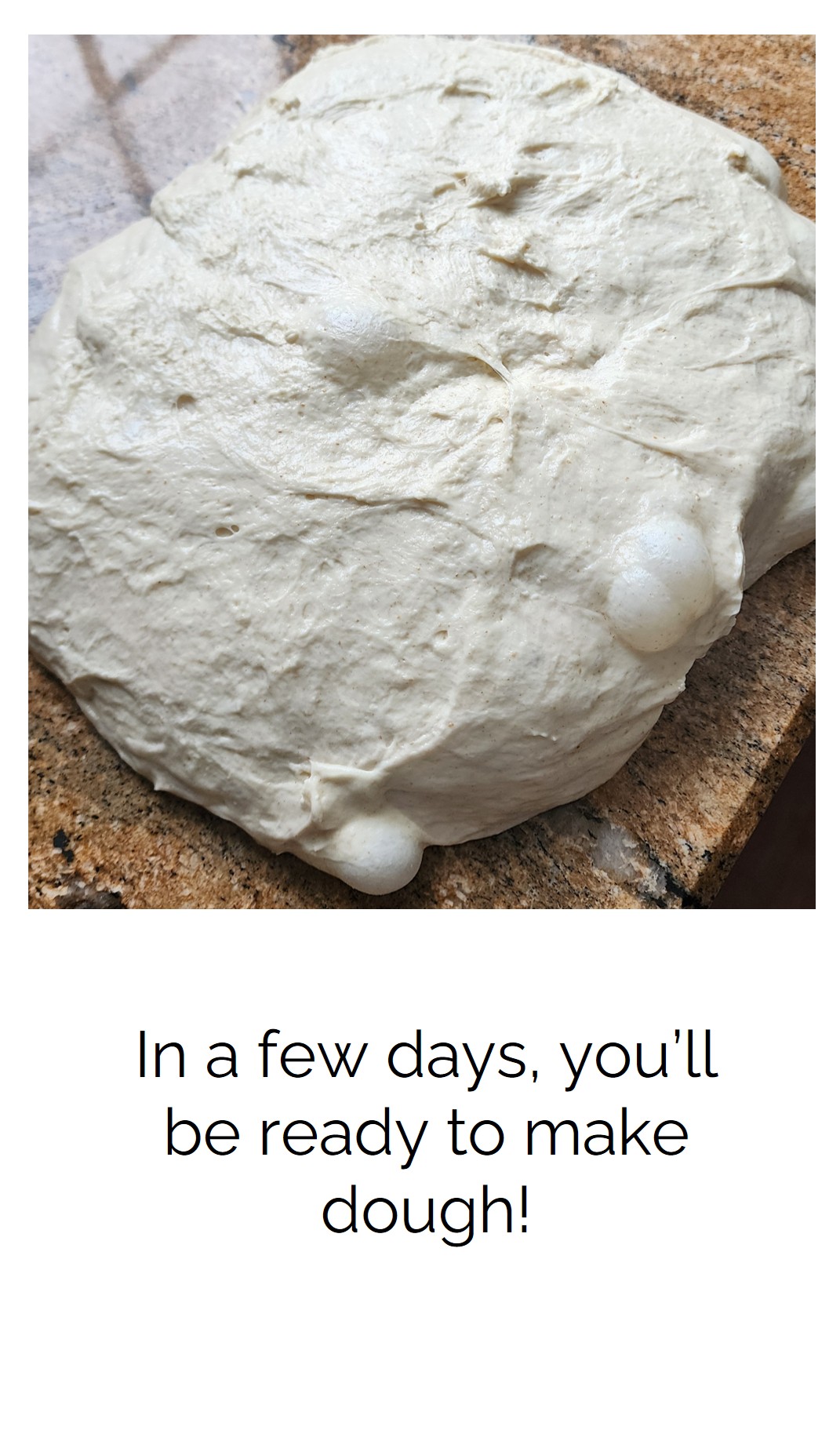
Your dough is ready to shape when it’s increased in size, domed shaped, has a few bubbles on top, pulls away easily from the side of the bowl, and jiggles when you shake the bowl.
THIS CHART is a great tool we use year-round to tell how much our dough should rise before it’s ready.
Any favorite places to get sourdough recipes?
Here are a few of our favorite websites:
- littlespoonfarm.com
- alexandracooks.com
- farmhouseonboone.com
We also post some of our favorite recipes with photos on our Facebook Page!
What's a good bread recipe for a first time sourdough baker?
Here’s my favorite foolproof recipe for a first time sourdough baker.
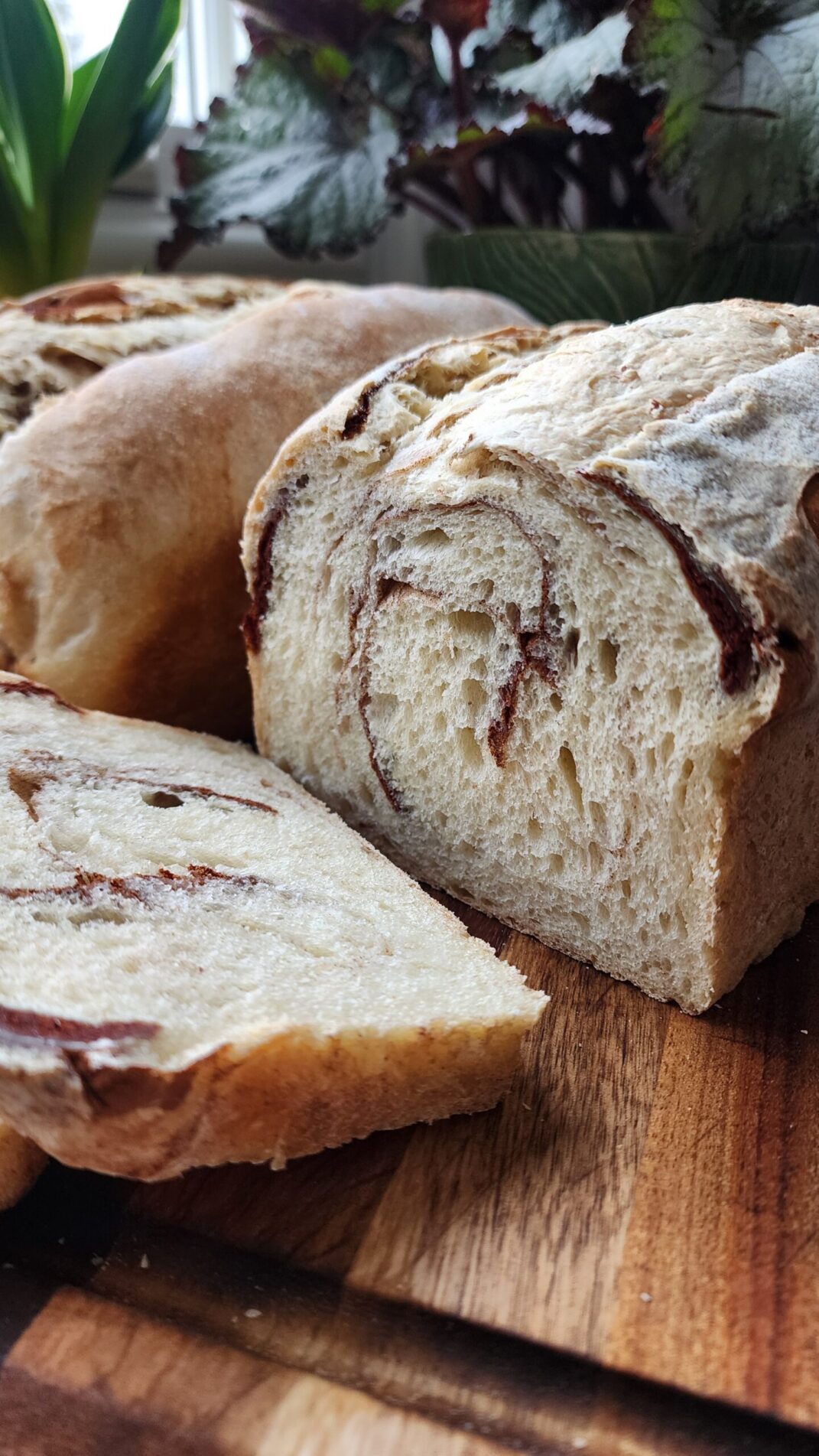
Same-Day Sourdough Sandwich Bread
INGREDIENTS:
125 grams sourdough starter (at peak or just after peaking)
325 grams warm water
12 grams olive oil
20 grams sugar or honey (or do what I do and measure with your heart)
500 grams AP flour
12 grams salt
STEPS:
-Combine starter and water. Mix until dissolved.
-Add olive oil and sugar/honey. Mix until dissolved.
-Add flour and salt and mix until a shaggy dough is formed. Put into a clear container (preferably with straight sides). Use a piece of tape or marker to mark the dough level on the side of the container. Cover it tightly with a lid.
-Let the dough rest 30 minutes. Then, perform a set of stretch and folds. Here is a video. Wet your hands. Pull up one side of the dough and fold it over the other side. Turn the bowl and stretch up the next side and fold it over. Repeat this all the way around your dough. When you’re done, keep the dough covered with a tight lid.
-Wait 30 minutes and perform another series of stretch and folds.
-Wait 30 minutes and perform one more set of stretch and folds.
-Let the dough rest for 4-10 hours, or however long it takes to nearly double.
-Shape the dough on a flat surface by flattening it out, pushing out any air bubbles. Fold the dough and roll into a log-shape. Try to build tension as you shape the dough. Don’t overwork or knead the dough at this point.
-Grease your loaf pan with butter or use a parchment liner.
-Place the dough in your loaf pan. Dust the top with flour, then cover with plastic wrap or Press-N-Seal. Let the dough rise in the pan at room temperature for 2-3 hours, or until the dough puffs up and fills the pan.
-Bake in an oven preheated to 375degrees, for 5 minutes. Take the dough out at 5 minutes and use a scoring tool or sharp knife to score a line down the center of the dough.
-Place back in the oven and continue to bake at 375 degrees for 30 more minutes or until browned on top.
-After baking, remove from the pan and cool on a wire rack.
-Use within 3 days or freeze, sliced.
Now Available for purchase!
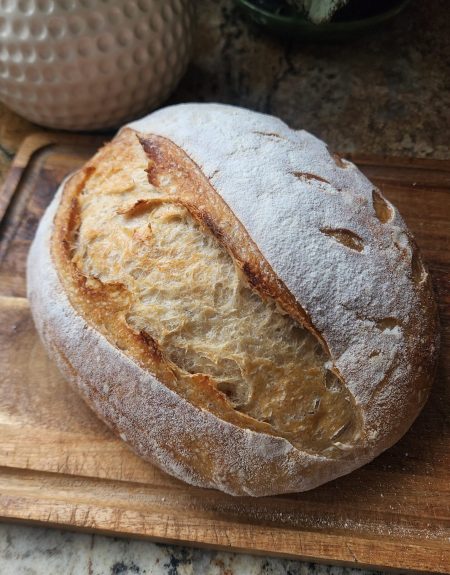
Ready to bake bread with real character and flavor without all of the artificial preservatives in store bought bread? Our Dehydrated Sourdough Starter will help you create naturally risen loaves and baked goods with all the health benefits of wild yeast.
Whether you’re starting your sourdough journey or elevating your everyday bake, our starter makes it easy to bring time-honored fermentation and exceptional results into your kitchen. Bring your bread to life with one wild rise at a time.